

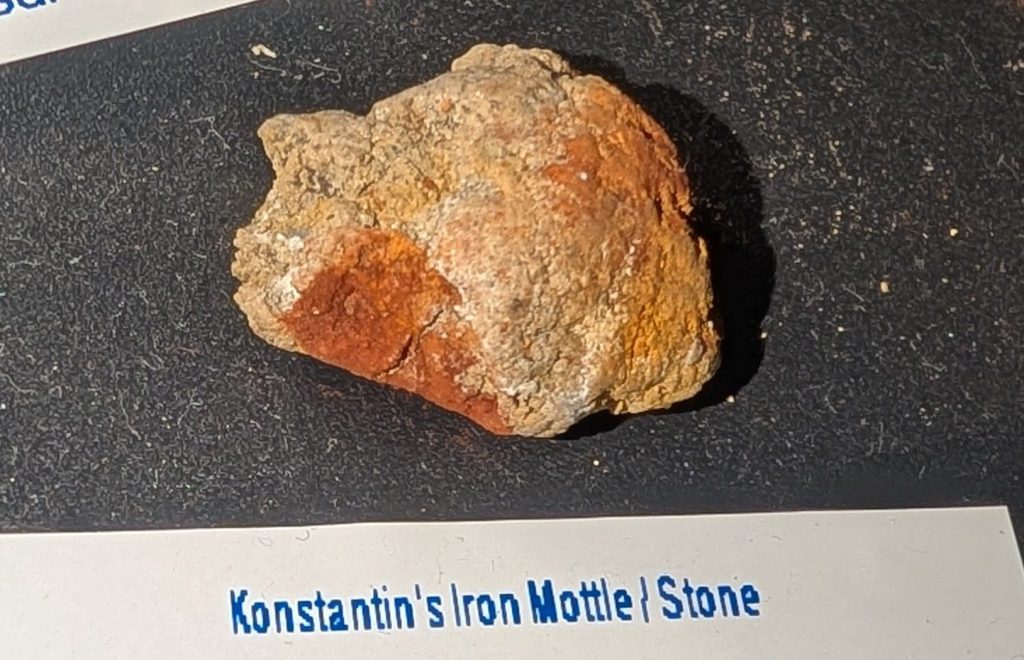
In my work I have frequently run into soils of the Gleysolic order. These are soils that have spent a significant portion of time being water logged. Gley (blue, grey, even green) colours are the diagnostic criteria for these soils, in the upper 50cm. Another clear sign of a Gleysolic soil is prominent mottling, although not all Gleysols have mottling. Mottling comes from reduction and then reoxidation of Iron. This iron can be from the parent material, or other sources. When I began soil survey, I was shown a piece of “iron stone”. At this time, I didn’t understand enough about the chemistry of soil to know the difference between Iron stone and iron mottling. In Canada, chunks of iron stone come from concretions, chunks of iron that are remnants of marine bacterial colonies. They are usually small, but can sometimes appear as huge concretions. When conditions in soil are anaerobic, bacterial colonies will turn to oxidized iron for energy, reducing the Iron and making it soluble. Once oxygen enters the pores of the soil again the iron re oxidizes and appears as orange stain marks on the original soil matrix. Iron stone doesn’t appear as stains on the soil surface but rather as individual chunks with defined boundaries. If you look very closely at the edges of the iron stone chunk you can see a tiny bit of gradient where the mottling process has happened to the outside of the concretion.
 Jaron Rosso Wiigs